Benzo Belly: Why Withdrawal Hits the Gut, and What Helps

In brief. "Benzo belly" is the name people in recovery gave to the stomach and bowel symptoms that often come with benzodiazepine withdrawal: bloating, cramping, pain, nausea, and constipation or diarrhea. It is not a formal diagnosis, but these symptoms are well documented in the withdrawal literature. Research shows the gut has its own GABA receptors, the same system benzodiazepines act on, which offers a plausible explanation. There is no specific treatment; gentle food, a slower taper and patience help most.[1][2]
What benzo belly is
You will not find "benzo belly" in a medical textbook. The name came from people going through withdrawal, who noticed that their stomach was suffering along with their sleep and nerves.
The symptoms themselves are well recorded. Professor Heather Ashton, who ran a benzodiazepine withdrawal clinic for many years, listed gastrointestinal symptoms among those her patients described, and noted they could lead to substantial weight loss.[1][3]
If your stomach changed when your dose came down, you are not imagining it.
Benzo belly symptoms
From Professor Ashton's clinical list and other withdrawal guides:[1][4]
- Bloating and a visibly swollen abdomen
- Cramping and abdominal pain
- Nausea, and sometimes vomiting
- Constipation, diarrhea, or both in turn
- Indigestion and difficulty swallowing
- Loss of appetite, or sudden cravings
- New reactions to foods you used to tolerate
That last one is common. Many people become convinced they have developed a food allergy. Often the gut is simply more reactive while the nervous system resets.
Why withdrawal reaches the gut
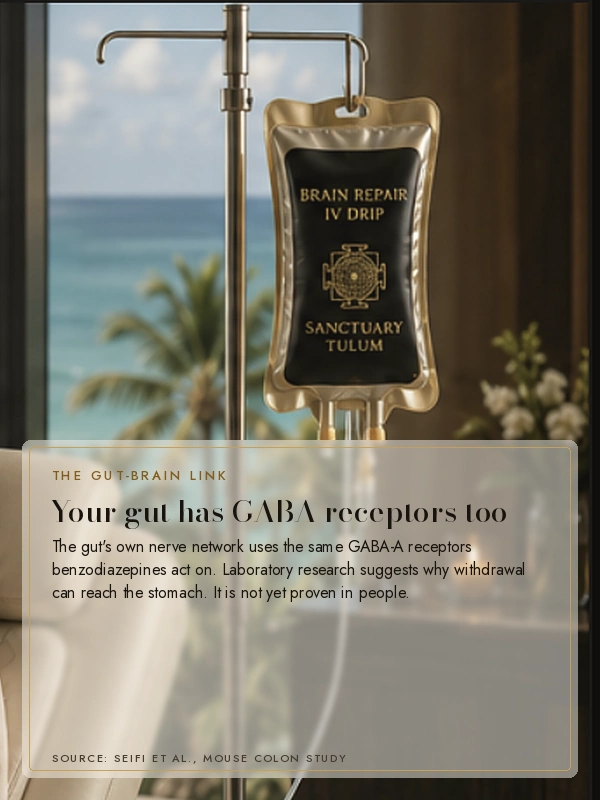
Benzodiazepines work on GABA-A receptors, which calm nerve activity. Most people think of these receptors as being in the brain. They are also found in the gut.
The digestive tract has its own network of nerves, the enteric nervous system, which controls how food moves through the bowel. Laboratory research in mice has found many types of GABA-A receptors in this network and shown that they help regulate the contractions of the colon.[2]
It is reasonable to think that when benzodiazepines are reduced, this gut system goes through its own readjustment. I want to be clear about where the evidence stops: this mechanism comes from animal research and has not been proven to cause benzo belly in people. Stress, poor sleep and changes in eating during withdrawal likely play a part too.
How long does benzo belly last?
No study has measured this directly. In practice, gut symptoms tend to follow the overall course of withdrawal: often strongest in the acute phase, then easing, sometimes returning in waves.
For people with protracted withdrawal, stomach symptoms can be among those that linger for months. See our benzo withdrawal timeline for the bigger picture.
What may help

There is no proven treatment for benzo belly. These are practical, low-risk steps many people find helpful:
- Keep food simple. Cooked vegetables, soups, rice, eggs and other foods you know you tolerate.
- Eat smaller meals, more often. A bloated gut handles less at once.
- Drink steadily through the day. Especially if you have diarrhea.
- Move gently. Walking after meals can ease bloating.
- Be careful with alcohol and caffeine. Both can irritate the gut and worsen anxiety.
- Don't cut out whole food groups without advice. Over-restriction can create new problems.
- Talk to your prescriber about the taper speed. If symptoms are severe, a slower pace may help.
Tell your clinician before adding supplements or over-the-counter remedies, since some interact with medications.
At Benzo Detox Protocol, nutrition is part of the protocol: fresh organic meals, anti-inflammatory and free of seed oils, built around how each guest's body is responding during a medically supervised taper. See what our benzo program includes.
When to see a doctor
Questions about benzo belly
Is benzo belly real?
Yes. "Benzo belly" is an informal name, but gastrointestinal symptoms during benzodiazepine withdrawal are documented in clinical literature, including Professor Ashton's work.
How long does benzo belly last?
It usually follows the course of withdrawal: worse early, easing over weeks, sometimes returning in waves. For some people it lingers for months.
Why am I suddenly reacting to foods?
The gut can become more sensitive during withdrawal. Many people find these reactions settle with time, so avoid cutting out foods permanently without advice.
Can benzo belly cause weight loss?
It can. Professor Ashton noted that gut symptoms in withdrawal may lead to substantial weight loss. Unexplained weight loss should always be checked by a doctor.
Sources
- Ashton CH. The Ashton Manual, chapter 3: withdrawal symptoms, acute and protracted
- Seifi M et al. Molecular and functional diversity of GABA-A receptors in the enteric nervous system of the mouse colon
- Ashton CH. Benzodiazepine withdrawal: an update
- NHS Scotland. Benzodiazepines and Z-drugs: discontinuation and withdrawal symptoms